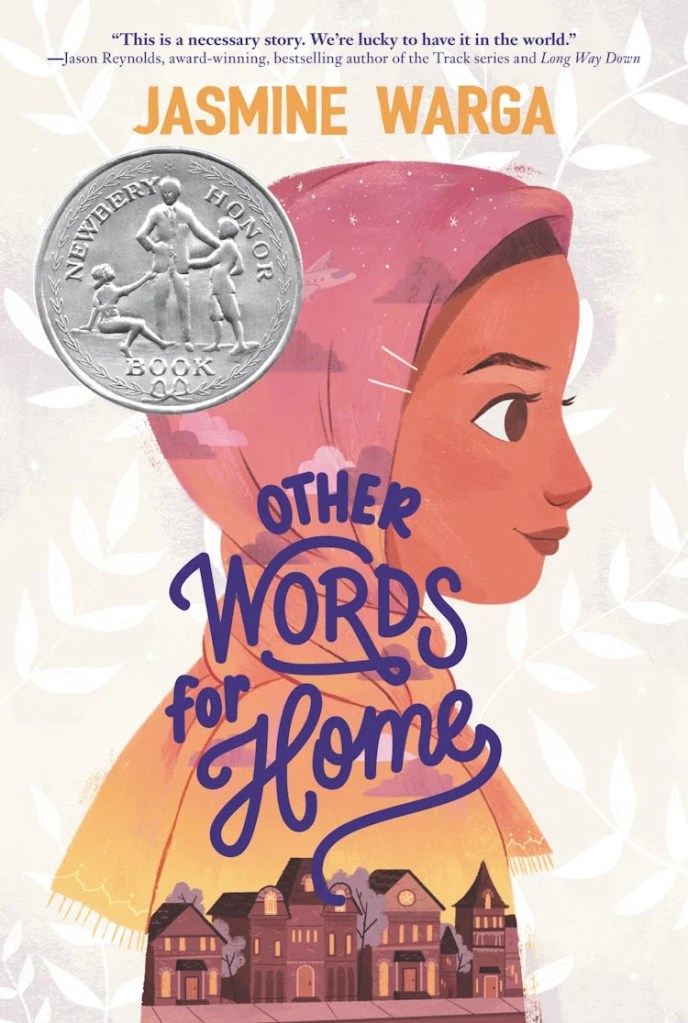
Other Words For Home is a heartbreaking, realistic fiction novel that will make you cry. It is told from the perspective of Jude, a Syrian girl who just recently moved to Cincinnati, Ohio. She struggles with being away from her brother and father, along with living in a new country. She has to learn the ropes of America, while worrying about her brother’s safety. This book teaches readers about how it feels to be new somewhere, and how it feels to not know anything about a place and then move there.
My favorite part in this book is when Jude first arrives at her class for ESL, or English as a Second Language, because it makes her feel like she belongs. It also helps her have a safe space, where she can be with people who understand her. My favorite quote is: “It’s bleeding!” This quote is when Jude tries steak for the first time, and she is convinced it’s bleeding. Her uncle Mazin tells her that it isn’t bleeding, that it’s perfect, which grosses her out even more. This book is a wonderful melancholy story that will leave you with hope, worry, fear, sadness, and pure joy.
This book is perfect for readers craving an emotional realistic fiction novel that will truly immerse them in the story. I recommend this book for ages 9 to 12, and I would rate it 5/5 stars. This book is not meant for younger readers, so it might not be the best choice for them. Overall, Other Words For Home is a superb bittersweet story.
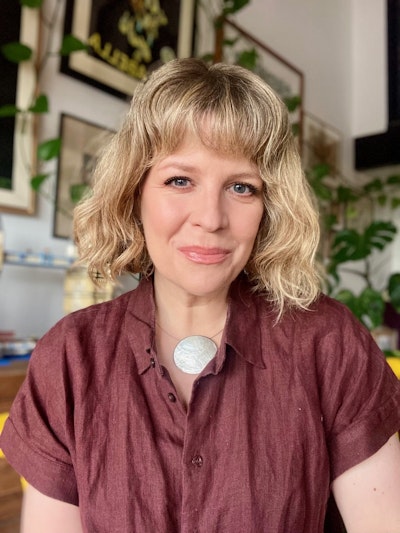
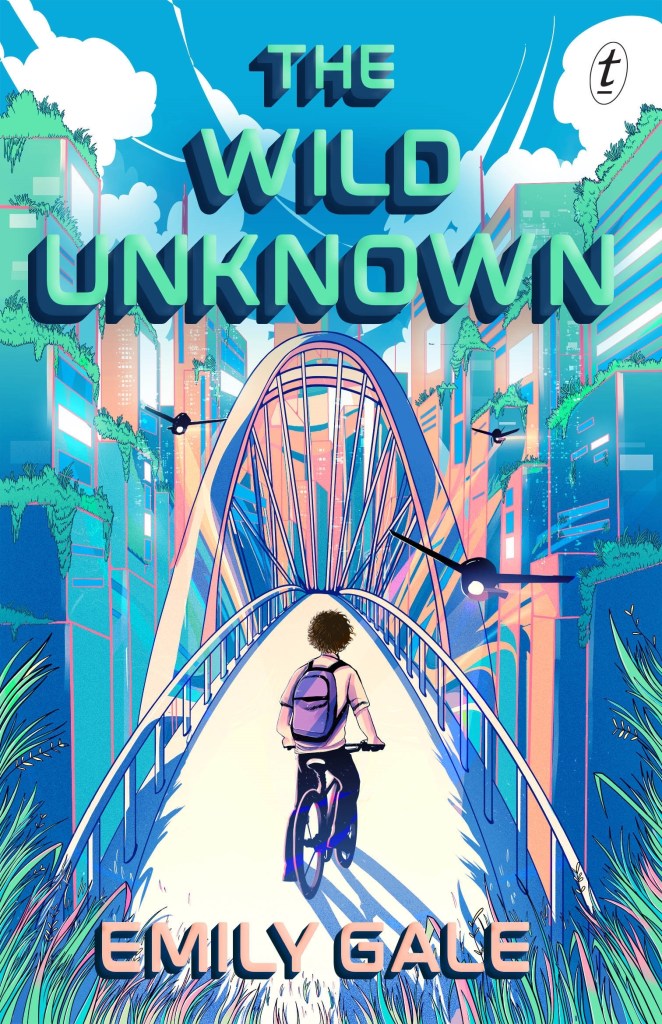
Emily Gale writes junior fiction, middle grade novels (novels for upper primary school), and young adult novels. Emily’s books have been published all over the world and shortlisted for a number of awards. Today we’re thrilled to be chatting with Emily about her latest novel: The Wild Unknown.
From the publisher:
It’s 2045 and the world is full of tech. Eddie has a bot in his ear giving him advice all day, a bathroom scale that identifies illnesses, and classroom bots keeping track of him at school. The streets are full of delivery bots and game tech is amazing. But tech can’t help the police find a missing boy called Theo, who was last seen at the river. Eddie and his friends sneak down to the river to look for clues. What they find doesn’t make any sense. Then strange things start happening to Eddie. The Wild Unknown is a gripping adventure set in a near-future world where the truth can be difficult to find and where real friends will always be better than the smartest tech.
Text Publishing provided Alphabet Soup with a reading copy of this book.
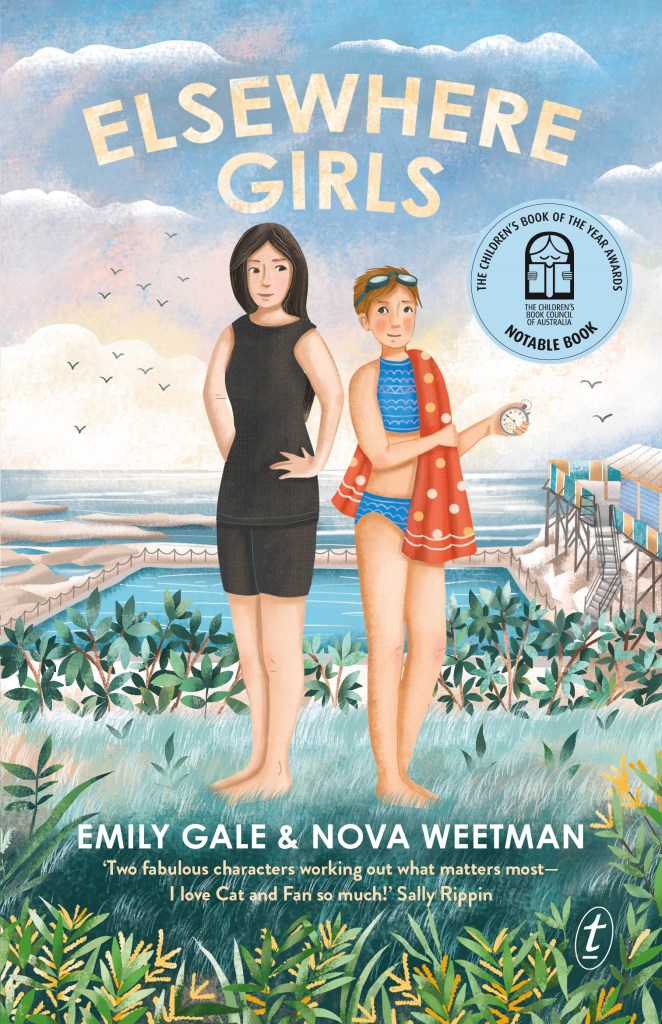
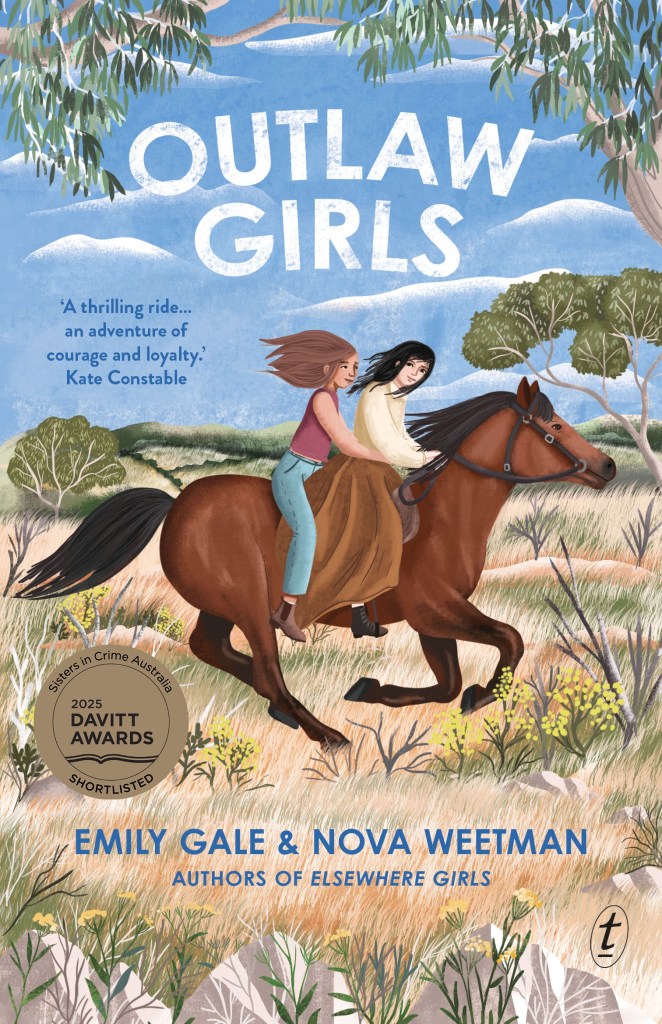
You wrote about the past and the present in your novels Elsewhere Girls and Outlaw Girls [both co-written with Nova Weetman]. What brought you to write about the near-future in The Wild Unknown?
I’ve always loved thinking about and writing about history. I like old things and sometimes feel nervous about new things. And that’s why I did it really: to step out of my comfort zone. I’d already decided on one part of the story, the transformation part (Eddie’s body changes in weird ways, for example he grows feather-like things on his arms), and I thought setting the story in the future would let me explore why that was happening using a mixture of my imagination and future predictions.
How did you go about imagining the technology that features in your 2045 world?
I made up anything I wanted to but I also did loads of research into the future, just the same as when I write about history. I had a research folder with subject headings that were important to my story. I looked into predictions of everyday things like food, architecture, home technology, medicine, school, and travel. That meant reading science articles and looking at what it’s like in other countries in terms of daily life and technology. For example, Japan has a lot more tech hardware than Australia, a lot of really cool stuff; China moves very fast in developing technology, and so does America which is home to a lot of the tech giants like Google and OpenAI. I wanted my story to feel Australian and be easy for readers here to picture themselves in. As the story is set twenty years in the future, I also looked back twenty years to see how much things have changed in that time. I had to make a lot of decisions, so I reminded myself that I am not a fortune-teller or psychic, and the future I was creating was for a story, so it didn’t matter if I got it “wrong”. In fact I hope I did get it wrong!
Is there any particular tech that you would love to see inyourfuture? (Or that you’d hope wasn’t around?)
Something that would benefit me is supersonic flight because I live on the other side of the planet from most of my family and I get homesick for London. It would make me so happy to be able to get there faster! The trouble is that supersonic flight would be harmful to the planet, so I can’t wish for that.
That’s the difficulty we face with a lot of tech: weighing up whether it will do more harm than good. Sometimes that’s hard to work out.
I’d like tech that actually makes peoples lives better without any downside — like Eddie’s dad in The Wild Unknown having an amazing wheelchair. Maybe for myself I’d like a robot to free up my time for writing by doing boring household tasks. But I wouldn’t want it to look human or pretend to be my friend because I think that messes with our minds, which is part of my storyline in The Wild Unknown.
How do you think current tech is changing the way humans might behave in our future?
The main worry for me is that humans need to keep our brains in shape, just like our bodies, and we know now that using screens too much makes our brains slower and sadder, while using some kinds of AI can stop us from thinking for ourselves. At the same time, breakthroughs in technology will save lives, so it’s all about balance! I trust that the natural beauty and the extraordinary gifts of our planet mean more to us than any tech, but we have to keep reminding ourselves of that and protect what makes us human, while developing technology that fits with that thinking.
Can you tell us a bit about what you’re working on next?
My next book is very different and it’s for much younger readers. It’s a funny, sweet, illustrated set of stories for younger readers about two animal friends, Ted (a fox) and Tuppence (a cat), which is coming out in 2027. I’ve also started working on another story set in the past, during World War One, which has a magical element to it a bit like Elsewhere Girls and Outlaw Girls. That’s all I can say because it’s a new idea and I like to keep new ideas safe and warm in my brain for a long time.
The Wild Unknown is out now! Ask for it at your favourite bookshop or local library.
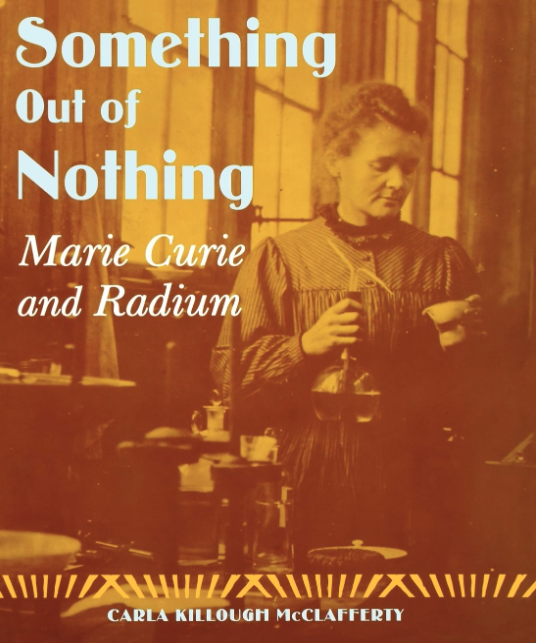
Something Out of Nothing: Marie Curie and Radium by Carla Killough McClafferty, St Martins PR (USA), ISBN 9780374371227
REVIEWED BY JIYA KAUR, 10, USA
Jiya Kaur reviewed her own copy of this book.
Something Out of Nothing teaches readers about Marie Curie, a marvelous scientist who discovered Radium and Polonium. Born as Manya Sklodowska on November 7th, 1867, she would soon grow up to become one of the world’s most revered scientists. She went from a poor Polish girl who worked as a governess, to the first woman and Polish person to ever win a Nobel Prize. This book will take you through the heartbreaking and hopeful journey of Marie Curie.
My favourite chapter in this book is when Marie starts to work as a governess to help her sister Bronya pay for college. They create an agreement to help the other pay for college, working in their motherland, Poland, until the other can pay to study at the Sorbonne in Paris, France. When Marie first arrives in France, she feels free and carefree. I like the quote “All that I saw and learned that was new delighted me. It was like a new world opened to me.” I love this quote because Marie feels free, joyous, and can’t wait to get started in the beautiful city she would soon call home.
I believe that readers ages 9 to 11 will enjoy this book. I would rate it 10/10 stars. I think this book is very emotional, so readers might prefer other reads if they want something continuously delightful and carefree.
Readers who love books about science, or the I Survived series will love this book. In all, Something Out of Nothing is a fabulous book by Carla Killough McClafferty that will teach readers about an exceptional scientist: Marie Curie.
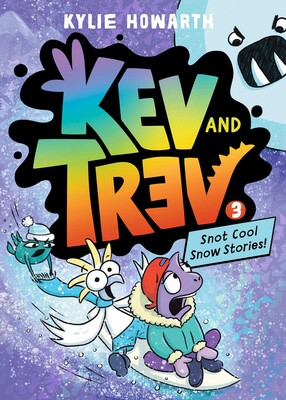
Kylie Howarth is an award-winning, internationally published children’s author-illustrator from Western Australia. Kylie has swum with whale sharks, manta rays and humpback whales in Ningaloo, piranha and pink dolphins in the Amazon, braved scuba diving with lionfish in Egypt, marine iguanas and hammerhead sharks in the Galapagos Islands and encountered great white sharks in South Africa. Today Kylie is visiting to talk about her latest book, the third in her graphic novel series, Kev and Trev: Snot Cool Snow Stories!
The publisher provided Alphabet Soup with a copy ofSnot Cool Snow Stories.
From the publisher:
Join Kev and Trev’s epic mountaintop adventure — full of chilly thrills and high-flying fun! Watch out for penguin paps, soak in steamy hot springs with snow monkeys and dodge the dreaded Abominable, all while searching for the rare and elusive snow pugons. And this time, the clock is ticking. Book Three is due one week earlier! Jump on board Kev and Trev’s popcorn-powered houseboat-balloon and brace yourself for their coolest adventure yet!
This is Book 3 in the Kev & Trev series. Book 1 was a deep sea adventure, Book 2 took us to the jungle and this latest book is set in the snow. How do you decide where to set each instalment?
I like to set my books in places I’ve adventured to and experienced firsthand. I recently took my kids snowboarding in Japan which was the first time they’d ever been in the snow. Seeing them experience snow and snowy mountains helped me see how Kev and Trev might feel in a new snowy landscape.
Given that a page is white … and snow is white … Do you have any tips for young artists wanting to set a scene in the snow?
Drawing a snowy setting was much less time consuming than drawing the thick jungle scenes that were in Book #2, so that was great! I took lots of photos of snowy trees when I was in Japan to help me see how the branches droop under the weight of snow which helped me to draw them when I got back to my studio. My tip would be to research and observe interesting details like that. How do footprints look in snow and how far do people’s feet sink into it depending on the depth of the snow?
Have you been to the snow like Kev and Trev? (Did you ever see anything like the Abominable?)
Yes, I have spent time in many different snowy countries including Australia, Japan, Austria, Italy and France. I’ve seen huge snowmen and snowballs, but thankfully none of those chased me. In Japan, a bear had been seen the week before we arrived! So, I was constantly on the lookout for bear tracks from the ski lifts, but luckily only saw snow bunny prints.
A graphic novel involves months of work. After creating three graphic novels in a series, have you changed the way you’re doing anything in the process of creating each graphic novel?
They certainly do take a lot of work to create which means many, many hours hunched over my iPad. After tweaking my neck too many times, I have now learnt to stretch and take breaks from drawing.
Can you tell us a bit about what you’re working on next?
I am very excited to be working on a picture book at the moment, as it’s been a few years since I’ve created one. This new character is not at all patient and has been bugging me to stop ignoring him and get cracking on his book. So far he has been fun to work with.
Snot Cool Snow Stories is out now! Ask for it at your favourite bookshop or local library.
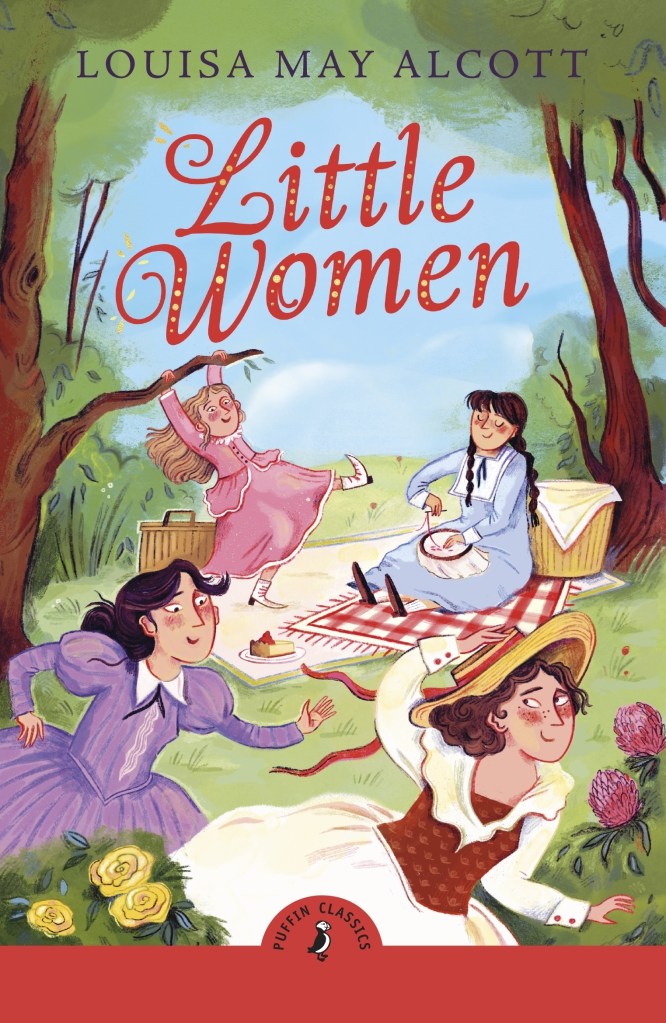
Little Women by Louisa May Alcott, Penguin Random House UK, ISBN 9780241735329
REVIEWED BY AZAADI KAUR, 8, USA
Azaadi Kaur reviewed her own copy of this book.
Little Women’s main characters are the four March sisters. Their names are Meg, Jo, Beth, and Amy. Meg is the oldest and prefers pretty things. Jo, the second oldest, is bold and likes to read. Next is Beth who is faithful, shy, and likes the piano, and the youngest is Amy, who likes to draw.
When the story starts, we learn that their father has gone out to war. He was the main person earning money for the family, but because he was away, the March family does not have much money.
The book is about the challenges they face as the sisters grow up and become young women. I’m pretty sure that this is where the book gets its title. Most of the time, the book takes place in the little hut where the girls live.
The parts of the books that I really like are when sometimes the sisters learn new lessons that help transform them into even better people. I learned from them about the importance of telling the truth and to report problems immediately any time they come up.
My favorite part of the book is when the girls do a good deed and someone else is really kind back to them. I like it because it shows how one act of kindness can trigger or spark another act of kindness. (And another, and another, and another.)
I would recommend the full book to ages 8–12 and the short story version to ages 6–9.
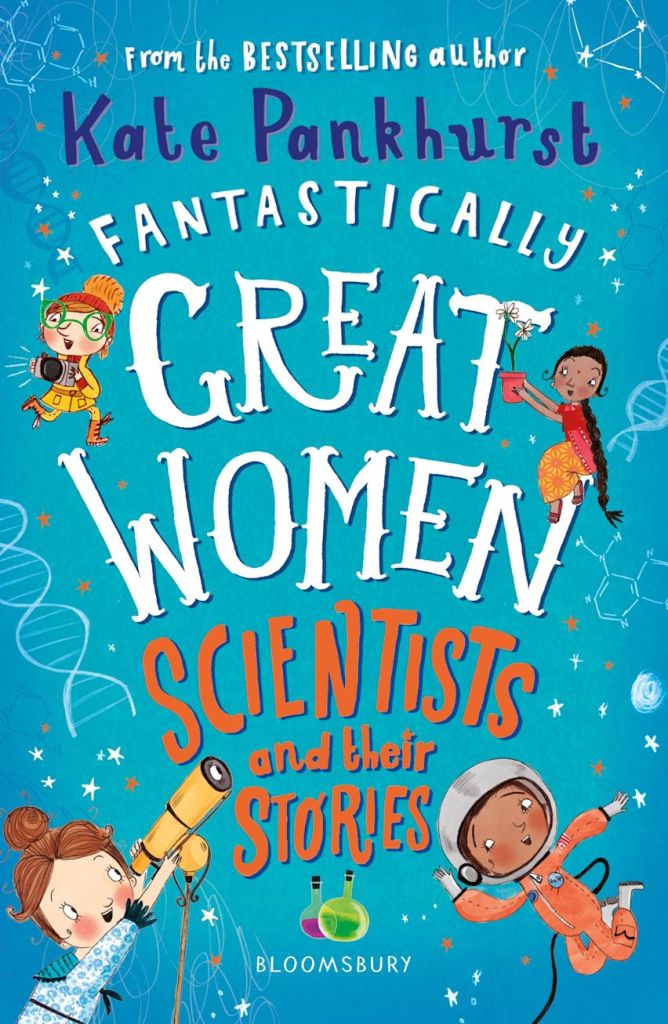
Fantastically Great Women Scientists and their Stories by Kate Pankhurst, Bloomsbury Publishing, ISBN 9781526615336
REVIEWED BY JIYA KAUR, 10, USA
Jiya Kaur reviewed her own copy of this book.
Fantastically Great Women Scientists and their Stories by Kate Pankhurst is a book that teaches the reader about extraordinary female scientists. Some of them include Marie Curie, Mae Jemison, and Rosalind Franklin. This book explores the challenges they faced, and also teaches you other things about their life; what they dreamed of as a kid, their inspiration, and more. This book is excellent because it shares surprising facts and motivational stories about legendary women.
My favorite chapter in this book is about Caroline Herschel, a terrific astronomer. She worked as a maid at home, until her brother brought her to his own house, where she became a soprano singer. When her brother shifted his focus to astronomy, she did too.
Fantastically Great Women Scientists and their Stories is a stellar book that teaches you that anyone can do anything, and to follow your dreams. I recommend it for anyone ages seven to ten, and I rate it five out of five stars. This book is inspirational, and it also reminds us that the most extraordinary people overcome difficult obstacles. All these women were really amazing, so take up the chance to learn about them.
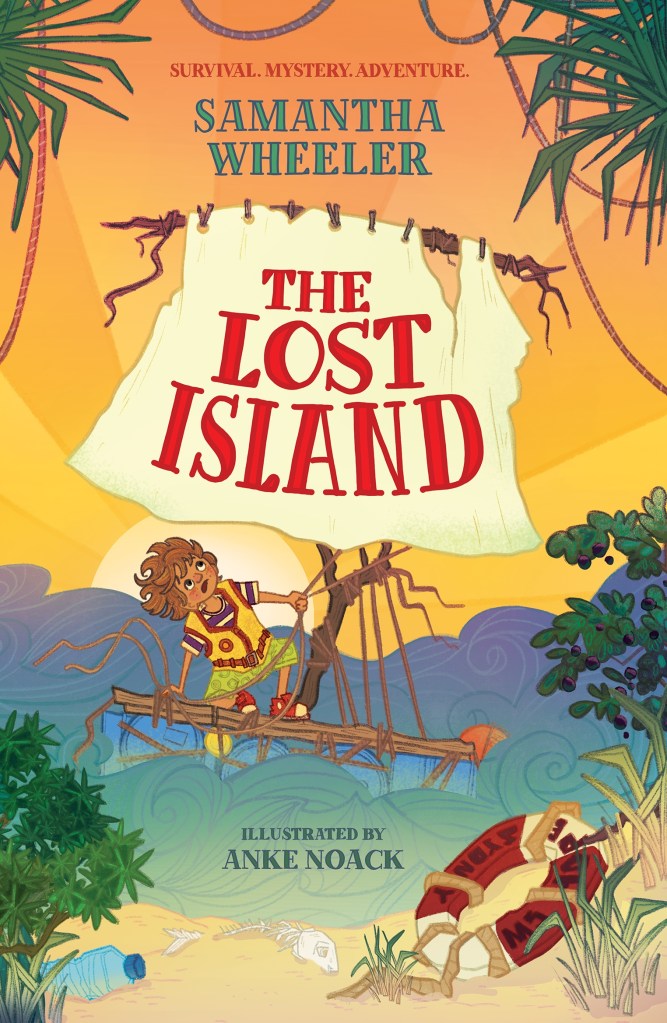
Samantha Wheeler‘s first children’s book was inspired by koalas. Her award-winning novels combine unforgettable adventures with real-world environmental themes. Through engaging characters and exciting journeys, young readers discover the wonder of Australia’s wildlife, wild places and the importance of connecting with nature. Today we’re chatting to Samantha about her latest novel: The Lost Island, illustrated by Anke Noack.
From the publisher:
Theo thinks there’s nothing worse than being stuck on a Pacific cruise with his dad, new stepmum and annoying stepsister. But when he’s thrown overboard during a storm and washes up on a desert island, he suddenly has much bigger problems: finding food, water and shelter. He discovers the island is full of mysteries: spooky noises, possible ghosts and the strangest birds he’s ever seen. With survival getting tougher by the day and no rescue in sight, Theo is desperate to get back to his family. But to escape the island, he must first unlock its secrets – and reckon with the power of nature.
Theo realises he’ll need to be resourceful to have any hope of surviving. How would you rate your own chances of survival if you found yourself stranded on a desert island?
Ha! This is such a good question because, as part of my research, I gave lots of survival skills a try! But I failed miserably! Fishing? Fail! Lighting a fire with a flint and rod? Fail! Building a waterproof shelter? Fail! I was also terrible at tying knots! The only things I did manage to do was crack open a coconut (on a rock) and find north and south. I also found water but since I couldn’t light a fire, I couldn’t drink it, and it was pretty stinky and murky, so again … fail. But, I really loved the experience, it made me appreciate nature even more, and oh my goodness, all the amazing things I noticed while I was out there in the bush! I’d really love to go and learn some proper survival skills now.
What would you miss most about everyday life if you did find yourself having to spend some time on a desert island?
Definitely drinking tea! I love a nice cup of tea in the mornings to help me wake up, so I’d really miss that! And hot showers! Then there’s my dogs (Louie and Nessa) and my husband. I’d miss them. And I’d miss reading, but I’m guessing to begin with I’d be too busy trying to survive to read. Unless I had some survival books. Apart from that, I’m thinking there would be lots of things I’d gain. Like all the birds I’d see and hear. And the sunsets!
This is fiction, but did you need to do any research while you were writing The Lost Island? How do you decide what to include in the landscape descriptions of an island you’ve never been to?
Yes, I did loads of research! I read up on survival skills of course, and found out all sorts of interesting things about currents and tides and how to find north and south. I also spent a week at Heron Island, where there are so many birds and not many people, which gave me lots of ideas for the setting plus ideas for the noises and behaviours of the birds. There are lots of mutton birds who hide their babies in tiny burrows on Heron Island, just like in The Lost Island, and their wailing … oh my goodness, it’s so spooky! I also got the idea for the turtles who hatch along the beach, when one day I was sitting watching the waves, the exact thing happened – shore birds and sharks snapping up the baby turtles as they tried to swim away. As for what to include: I am very much a plot person, so big lengthy landscape descriptions have never been my thing. I like to include just enough that you get the idea but I wouldn’t want to go overboard, otherwise you’d skip that section because it’d be too long and boring.
How do you like to write – do you plot your novel out before writing, or fly by the seat of your pants?
I usually just write as I go, flying by the seat of my pants! But with The Lost Island I really wanted to show how Theo learns to connect with nature, so I needed to plan a bit more. I planned some scenes before I started writing, like when Theo realises he’s alone but hears the wailing noises, when he keeps getting lost and when he fails at lighting a fire and so on, but the rest I just wrote as I went. Unfortunately, this means that my stories take longer to write, with a lot more deleting and editing to make sure the plot and characters work.
Can you tell us a bit about what you’re working on next?
I haven’t started a new project yet, but I have so many ideas!! I have a picture book idea about a crocodile with no teeth which is an early draft form, a possible sequel to Smooch & Rose, my first book (after seeing how many koala trees are still being cleared near where I live) or even maybe a sequel to The Lost Island. Maybe Theo could have another adventure somewhere!
The Lost Island is out now. Ask for it at your favourite bookshop or local library.
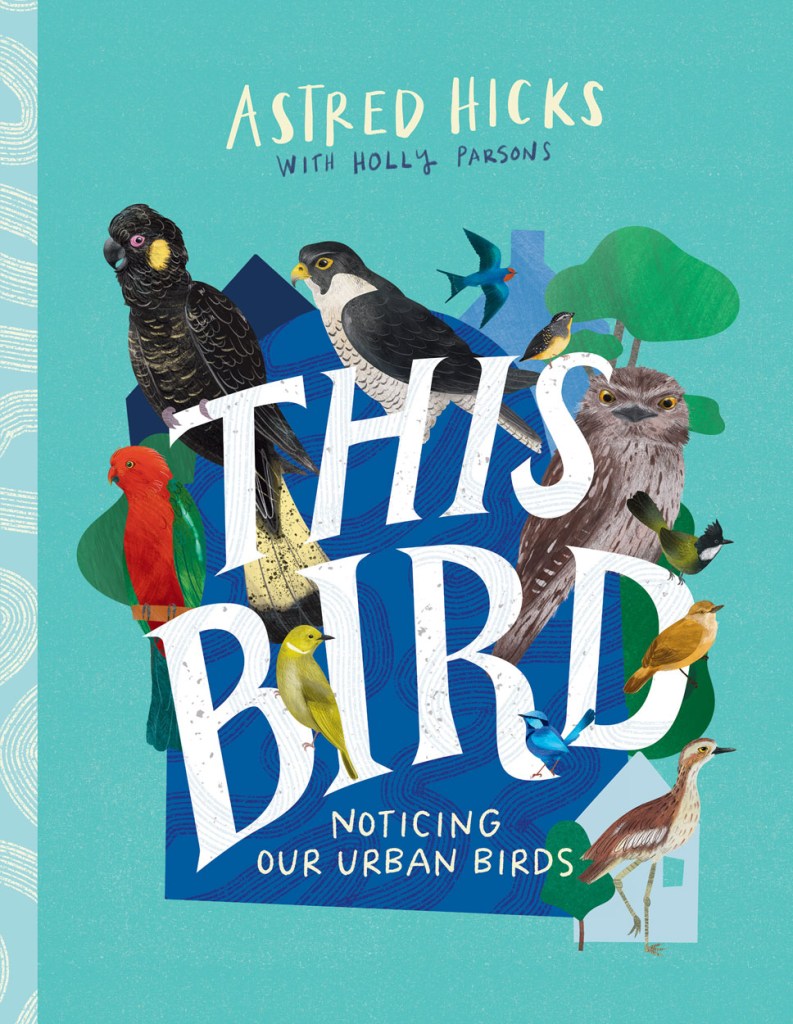
This Bird: Noticing Our Urban Birds by Astred Hicks with Holly Parsons, CSIRO Publishing, ISBN 9781486318452
REVIEWED BY MARLEY, 10, WA
Marley received a review copy of this title from the publisher.
From the publisher:
What’s so fancy about this bird? What’s so clever about that bird? Perhaps it’s a weightlifter, a marathon flier, an artist, or even a liar. You don’t need to go far to see intriguing birds, even in the city. From colourful parrots to artistic bowerbirds and fancy fairy-wrens, there’s lots to notice in our local backyards, streets and parks.
This Bird: Noticing Our Urban Birds is a great factual text book about birds. It explains everything from funny details to extraordinary facts that you would never find just reading on the internet. I loved and enjoyed reading this book very dearly. It has great illustrations with an eye for detail.
It would be good for any age, for anyone interested in wildlife. I read about the willie wag tail, which is my favourite bird, and I think it would be a great reference book for local wildlife.
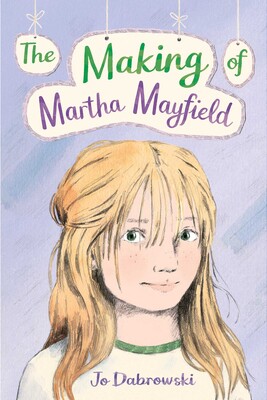
Martha Mayfield has always been the quiet kid. Martha is, after all, her mother’s daughter. The shy child of an even shyer mum. And she likes it this way. That is, until Martha’s mum loses her job. And Martha’s teacher overlooks her at school. And soon, Martha realises something has to give. Can she really go through life being so quiet that nobody takes her seriously? Should she really keep all her good ideas to herself forever?
The Making of Martha Mayfield is an entertaining and fun read. I especially enjoyed this book as it is very relatable to life as a 10/11 year old. The plot was interesting and easy to follow, and the characters, particularly Martha, seem familiar in a way.
I would definitely recommend this book to others. I really loved it.
Wonder by RJ Palacio, Random House UK, ISBN 9780552565974
REVIEWED BY AZAADI KAUR, 8, USA
Azaadi Kaur reviewed her own copy of this book.
Wonder is a book about August Pullman, also known as Auggie. Auggie has an unusual face due to the many surgeries he has had. It is Auggie’s first time going to school. Auggie makes friends with two other kids who go to his school: Jack Will and Summer Dawson.
Julian Albans is an annoying kid who is in Auggie’s class and is really popular at school.
One Halloween, Auggie’s school lets the students wear costumes to school. Auggie was going as Boba Fett from Star Wars, but at the last minute Auggie changed into Bleeding Scream (also from Star Wars).
When Auggie walks into the classroom, there are three kids in costumes there: Darth Sidious from Star Wars and two mummies. They are all waiting for Boba Fett. Auggie knows this, so he wanders off to a different seat.
Auggie overhears them talking:
"Why do you hang out with him so much?" asked Darth Sidious. Auggie knew it who it was.
One of the mummies replied: "I don’t know, Mr. Tushman asked me to, and now August is following me around everywhere." The mummy shrugged.
Auggie recognized the shrug and the voice. This hurt Auggie’s feelings. He didn’t like that he said something mean about him. In the following weeks, Auggie showed some bravery, including standing up to some bullies.
My favourite part of the book is when Auggie earns the award. I think that it shows that being brave always pays off.
I think that the message that this book is sharing with us is: Even if there is a difference in you or your family, never let embarrassment get the best of you, and always stand up for what’s right.
I recommend this book to ages 8+. If you read Wonder, I hope you enjoy it.
This is Azaadi Kaur’s first review for Alphabet Soup. To send us YOUR book review, read our submission guidelines. Happy reading!